.JPG)

Step back in time to a land where Cowboys still roam the open range. A land where Native American’s hunted buffalo by the herds of 10,000+! Ride horseback down the wagon trails from the 1800’s. See a land that hasn’t changed much since the early settlers. Rolling Plains Adventures, home of the Black Leg Ranch, offers all inclusive world class hunting for pheasant, waterfowl, coyote, and deer as well as professionally guided fishing trips, western vacations, and more!
Thursday, August 30, 2012
ND Bowseason opens tomorrow!
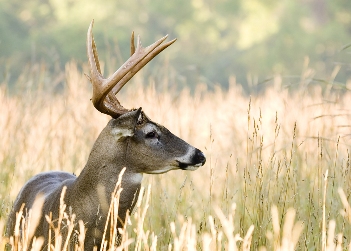
Rolling Plains Adventures is excited to open our bow season tomorrow at noon. We have been busy scouting and patterning deer all summer, so good luck to the hunters that hit the stand this week. Here is a photo from one of the bucks we have watched this summer.
.JPG)


Saturday, August 11, 2012
Bow Hunting Season Right Around the Corner!
With bow hunting season only a few weeks away, we wanted to share a few tips to help you in the field. This write up by Bill Vaznis has some great tips to bagging that trophy this fall. In my opinion, one of the key reasons hunters have missed the shot, is because they are rushing the shot. Most of the time, the buck will gill give you a better opportunity or a few more seconds, so don't release at the first opportunity that arrives if you aren't comfortable. It is better to let that animal walk then miss a make able shot or wound the buck of a lifetime. Enjoy!
 It was a perfect morning. I was still-hunting along an old logging trail that opened up to an overgrown farm field behind my home in upstate New York when a hot doe stepped out in front of me. I could barely see her in the early morning darkness, but when she jumped into a nearby wood lot with her tail off to one side I thought I heard a second much larger deer grunt and then make a break for it in the opposite direction.
I slipped forward until I reached the edge of the field, and glassed across the knee-high briars and golden rod. Nothing.
It was a perfect morning. I was still-hunting along an old logging trail that opened up to an overgrown farm field behind my home in upstate New York when a hot doe stepped out in front of me. I could barely see her in the early morning darkness, but when she jumped into a nearby wood lot with her tail off to one side I thought I heard a second much larger deer grunt and then make a break for it in the opposite direction.
I slipped forward until I reached the edge of the field, and glassed across the knee-high briars and golden rod. Nothing.
I began sneaking along the edge of the field looking for the buck that I knew had to be still nearby when something caught my eye just out of bow range. It was the white throat patch of a buck. Not a big one mind you, but a racked deer nonetheless that was zigzagging his way back towards me, obviously seeking out that hot doe.
By now it was light enough to shoot, so I, too, began zigzagging across the field, trying to keep the buck in view without spooking him. At thirty yards he dropped down into an irrigation ditch. I knelt down, quietly slid an arrow from my quiver and knocked an arrow all in one fluid motion. When the buck popped back into view he was sneaking 20 yards past me at a broadside angle and oblivious to my presence. I immediately came to full draw and focused on a spot behind his near shoulder. When my single pin covered that patch of hide for a full second I relaxed my fingers sending a Phat Head-tipped shaft to its mark. I found the buck piled up 100 yards distant, dead from a double lung pass through.
That was my 25th whitetail tagged by still-hunting with archery tackle. I would like to say I never missed a buck once I set my sights on him, but that has not always been the case.
“I have missed some embarrassingly easy shots over the years,
 We must come to full draw with confidence that our equipment will function flawlessly. In some cases however that can be a false sense of security. Why? Any changes you make to your bow after it is tuned can have a deleterious effect on arrow flight.
When the moment of truth arrives however, do not change your mind and add a few yards “just in case” the buck is further away as you will surely shoot over its back. Look back over your own career, and count the number of times you underestimated the shooting distance. I will bet that that figure is quite low when compared to the number of occasions you overshot the animal.
Indeed, in the last two years I skewered two long-distance whitetails, one at 40 and the other 42 yards. I estimated the shooting distance before I came to full draw, and then stayed with my initial calculations. Your first estimate is almost always the most accurate.
Pinning a compass to your jacket for example is a sure way to get it ripped off by the bow string. Not only will you destroy your compass, but it will also deflect an otherwise perfect shot. Get into the habit of tucking grunt tubes and binoculars inside your shirt or jacket and out of harm’s way. And keep your compass in your back pack.
What can you do about it? Do not limit your pre-season practice sessions to standing shots on level ground at 20 yards. Try stump shooting at unknown distances from sitting and kneeling positions or climb into a tree stand and practice shooting around the tree’s trunk from awkward angles. These exercises will help prepare you for any shot that might come down the pike.
If you have the time, use your pins to insure you have a clear path for your arrow. If you are taking a 40-yard shot for example, and your 30-yard pin is centered on an overhanging limb, then by all means raise or drop your line of sight to take the shot.
But do not overlook the obvious. A friend of mine once missed a dandy buck because he rested the lower limb of his bow on the platform of his tree stand. He later explained he was shaking like the proverbial leaf and needed to anchor the bow to stop the sights from weaving all about.
 Indeed, I once caught a buck flat-footed as he fed along the edge of a cut corn lot one windy morning. He seemed a bit nervous, but when he turned broadside to me at 20 yards I released a vaned shaft at his vitals just as he stepped forward. Much to my surprise the buck suddenly hopped forward causing my arrow to sail harmlessly across the field. He then lowered his head and continued feeding before jumping a barbed wire fence and trotting out of range. I am convinced this nervous buck caught in mid stride heard the arrow leave the bow, and was already coiled to react instinctively to the strange noise.
A sudden whistle or grunt will generally stop the buck long enough for you to settle your pin, but if that does not work let your bow down. You may be able to draw him back into range with some deer vocalizations.
One problem that quickly comes apparent is where exactly to put your pin. I have taken several bucks under ten yards, including one seven pointer at three yards. However, I missed (gulp!) a mature eight pointer this past season at 12 feet because I failed to thread a broad head through a small opening in a maze of low-hanging thorn apple branches.
Shooting straight down out of a tree stand is another conundrum. It is best to practice this shot before the season opens to learn exactly where your arrow will hit at ten or twelve feet. You may have to aim low. In addition, you need to be sure your equipment is up to the task. Arrows have been known to fall off the rest at the worse time.
Let me put it this way, I would not want to be standing in the goldenrod and have someone with average shooting skills firing arrows at me, and expect a few goldenrod stalks to protect me. Use your head here; you don’t always have to pass up the shot because the animal is partially concealed by vegetation.
I try to control the entire shooting situation by having a step-by-step mental check off list to rely on: First estimate the yardage and then pick a spot to shoot at. Now come to full draw while staring at that spot, and hold it steady for three seconds.
Now I tell myself, “you haven’t got him yet, you need a clean release.” It forces me to take one more second and concentrate on a perfect release with follow through.
I have learned that if I skip a step I am sure to miss, no matter how easy the shot appears to be. But when I adhere to this check off list, the odds of a solid hit and good blood trail are high.

Why We Miss At The Moment of Truth!
By Bill VaznisIt was a perfect morning. I was still-hunting along an old logging trail that opened up to an overgrown farm field behind my home in upstate New York when a hot doe stepped out in front of me. I could barely see her in the early morning darkness, but when she jumped into a nearby wood lot with her tail off to one side I thought I heard a second much larger deer grunt and then make a break for it in the opposite direction.I began sneaking along the edge of the field looking for the buck that I knew had to be still nearby when something caught my eye just out of bow range. It was the white throat patch of a buck. Not a big one mind you, but a racked deer nonetheless that was zigzagging his way back towards me, obviously seeking out that hot doe.
By now it was light enough to shoot, so I, too, began zigzagging across the field, trying to keep the buck in view without spooking him. At thirty yards he dropped down into an irrigation ditch. I knelt down, quietly slid an arrow from my quiver and knocked an arrow all in one fluid motion. When the buck popped back into view he was sneaking 20 yards past me at a broadside angle and oblivious to my presence. I immediately came to full draw and focused on a spot behind his near shoulder. When my single pin covered that patch of hide for a full second I relaxed my fingers sending a Phat Head-tipped shaft to its mark. I found the buck piled up 100 yards distant, dead from a double lung pass through.
That was my 25th whitetail tagged by still-hunting with archery tackle. I would like to say I never missed a buck once I set my sights on him, but that has not always been the case.
“I have missed some embarrassingly easy shots over the years,
but those misses have taught me what to do and not do
when the moment of truth presents itself.”
1. DON’T MAKE ANY LAST-MINUTE EQUIPMENT CHANGES
We must come to full draw with confidence that our equipment will function flawlessly. In some cases however that can be a false sense of security. Why? Any changes you make to your bow after it is tuned can have a deleterious effect on arrow flight.
The most common mistake is to increase your draw weight just before the big hunt, but attaching a different quiver, stabilizer, or brand of broad head can also cause your hunting arrow to fly off into the wild blue yonder.
The solution to this problem is simple: Don’t make any last minute changes to your hunting equipment unless you have absolutely no choice. If you must, however, be sure to take a few practice shots to make sure everything is still in perfect working order before stepping afield.2. DON’T SECOND GUESS THE SHOOTING DISTANCE
Always estimate the shooting distance before you come to full draw. Still-hunters rarely know the yardage before the animal appears, but if you hunt from a tree stand or ground blind, you can use a range finder to learn the exact yardage to several likely shooting locations before you begin your vigil.When the moment of truth arrives however, do not change your mind and add a few yards “just in case” the buck is further away as you will surely shoot over its back. Look back over your own career, and count the number of times you underestimated the shooting distance. I will bet that that figure is quite low when compared to the number of occasions you overshot the animal.
Indeed, in the last two years I skewered two long-distance whitetails, one at 40 and the other 42 yards. I estimated the shooting distance before I came to full draw, and then stayed with my initial calculations. Your first estimate is almost always the most accurate.
3. DON’T ALLOW CLOTHING INTERFERENCE
Be sure to practice in your hunting clothing prior to the season, paying close attention to anything that can interfere with arrow flight such as unbuttoned pockets, puffy arm sleeves and draw strings on hooded sweatshirts. However, we can still manage to get an arrow off course by adding something to our attire later on when we finally step into the field.Pinning a compass to your jacket for example is a sure way to get it ripped off by the bow string. Not only will you destroy your compass, but it will also deflect an otherwise perfect shot. Get into the habit of tucking grunt tubes and binoculars inside your shirt or jacket and out of harm’s way. And keep your compass in your back pack.
4. PRACTICE UNORTHODOX SHOOTING ANGLES
It makes little difference if you bow hunt from a tree stand, ground blind or on foot, sooner or later you will be presented with a difficult shooting opportunity. The buck may pass behind your tree stand for example or you may have to shoot from a hunched position on foot or from inside your ground blind.What can you do about it? Do not limit your pre-season practice sessions to standing shots on level ground at 20 yards. Try stump shooting at unknown distances from sitting and kneeling positions or climb into a tree stand and practice shooting around the tree’s trunk from awkward angles. These exercises will help prepare you for any shot that might come down the pike.
5. CHECK FOR ADEQUATE CLEARANCE
Before coming to full draw you must quickly determine if there is anything along the projected arrow’s route that could cause a deflection. We have all missed because our arrow contacted an unseen twig or an overhanging branch.If you have the time, use your pins to insure you have a clear path for your arrow. If you are taking a 40-yard shot for example, and your 30-yard pin is centered on an overhanging limb, then by all means raise or drop your line of sight to take the shot.
But do not overlook the obvious. A friend of mine once missed a dandy buck because he rested the lower limb of his bow on the platform of his tree stand. He later explained he was shaking like the proverbial leaf and needed to anchor the bow to stop the sights from weaving all about.
6. AVOID SHOOTING AT ALERT ANIMALS
Your goal should always be to shoot at an animal that is relaxed and unaware of your presence. A buck that has you pegged, or appears nervous can fall back, jump up, leap forward, switch ends, drop to his knees or simply skedaddle before you can release an arrow. And if by chance you do manage to get a shot off the result is almost always a miss, or worse.Indeed, I once caught a buck flat-footed as he fed along the edge of a cut corn lot one windy morning. He seemed a bit nervous, but when he turned broadside to me at 20 yards I released a vaned shaft at his vitals just as he stepped forward. Much to my surprise the buck suddenly hopped forward causing my arrow to sail harmlessly across the field. He then lowered his head and continued feeding before jumping a barbed wire fence and trotting out of range. I am convinced this nervous buck caught in mid stride heard the arrow leave the bow, and was already coiled to react instinctively to the strange noise.7. AVOID THE WANDERING EYE
You should always pick a spot to shoot at BEFORE you bring your bow to full draw. In the excitement of the hunt it is easy to get rattled and stare at the rack (which you will invariably hit!) or look at the whole animal to which case you will surely miss him by a country mile. Picking a spot before you raise your bow forces you to block out other stimuli and concentrate on settling the pin on that specific area.8. DON’T RUSH THE SHOT
One of the more common ways to flub an opportunity is to allow our emotions to short circuit our common sense. During the rut for example when bucks are prancing about it is not uncommon to be at full draw and have the buck suddenly take off in another direction. Your worse course of action now is to snap off a shot. We panic because we fear the buck is going to get away.A sudden whistle or grunt will generally stop the buck long enough for you to settle your pin, but if that does not work let your bow down. You may be able to draw him back into range with some deer vocalizations.
9. DON’T SHOOT TOO CLOSE
We all know we should pass up shot opportunities that are beyond our capabilities, but what about those times when the buck is only a few yards away? Indeed, close range shooting can be as demanding as the long shots.One problem that quickly comes apparent is where exactly to put your pin. I have taken several bucks under ten yards, including one seven pointer at three yards. However, I missed (gulp!) a mature eight pointer this past season at 12 feet because I failed to thread a broad head through a small opening in a maze of low-hanging thorn apple branches.
Shooting straight down out of a tree stand is another conundrum. It is best to practice this shot before the season opens to learn exactly where your arrow will hit at ten or twelve feet. You may have to aim low. In addition, you need to be sure your equipment is up to the task. Arrows have been known to fall off the rest at the worse time.
10. DO NOT LET DOWN
I practice shooting through brush, tall grass and weeds to learn how a particular broad head might react under hunting conditions. It is surprising what an arrow can pass through and still be on target, especially if the buck is standing in tall grass, and how a single pencil thin twig will easily deflect a broad head.Let me put it this way, I would not want to be standing in the goldenrod and have someone with average shooting skills firing arrows at me, and expect a few goldenrod stalks to protect me. Use your head here; you don’t always have to pass up the shot because the animal is partially concealed by vegetation.
Bonus Tip: DON’T PUNCH OR PLUCK
You can still blow an easy shot if you fever up at the last second and either punch the release or pluck the string.I try to control the entire shooting situation by having a step-by-step mental check off list to rely on: First estimate the yardage and then pick a spot to shoot at. Now come to full draw while staring at that spot, and hold it steady for three seconds.
Now I tell myself, “you haven’t got him yet, you need a clean release.” It forces me to take one more second and concentrate on a perfect release with follow through.
I have learned that if I skip a step I am sure to miss, no matter how easy the shot appears to be. But when I adhere to this check off list, the odds of a solid hit and good blood trail are high.
Bill Vaznis, Outdoor Author & Editor, Bear Hunting Magazine
Thursday, July 26, 2012
Wedding Venue at the Ranch

Rolling Plains Adventures recently hosted a wedding reception at the ranch. Here is a photo from the bride and groom standing in front of the wood fence by the Grand Lodge. It was a beautiful day with a perfect North Dakota sunset! All of the guests danced the night away and listened to the live band. The bar in the Grand Lodge was a big hit as well!
Monday, July 23, 2012
Looking excellent for this falls hunting season!
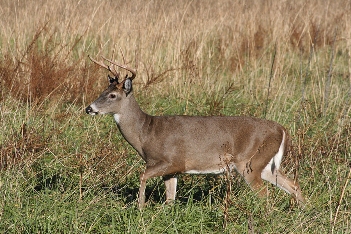
Went out scouting today and seen over 15 whitetail bucks feeding in our fields. The antler growth has been very good this summer season by the looks of things. There is also a strong age of deer in the 2.5 to 3.5 age, which is great to see. Bow season is only a little over a month away!
The ring-neck pheasant hatch looks to be very good this season also. They got off to an early start with the mild winter and we are seeing young roosters that are already getting their color. With the warm, dry nesting season, its been perfect for pheasant hatch!
The waterfowl population is reported to be at a record high by this fall due to the amount of standing water going into the spring. Now that many of the smaller potholes have dried up, hunters should see way more action in the standing water left come this fall.
This fall is going to be a great hunting season and your team at Rolling Plains Adventures is pumped!
The ring-neck pheasant hatch looks to be very good this season also. They got off to an early start with the mild winter and we are seeing young roosters that are already getting their color. With the warm, dry nesting season, its been perfect for pheasant hatch!
The waterfowl population is reported to be at a record high by this fall due to the amount of standing water going into the spring. Now that many of the smaller potholes have dried up, hunters should see way more action in the standing water left come this fall.
This fall is going to be a great hunting season and your team at Rolling Plains Adventures is pumped!
Thursday, July 19, 2012
Flyway Highway with Craig Foster at Rolling Plains Adventures
The Flyway Highway filmed an episode at Rolling Plains Adventures last fall and will start airing on the Sportsman's Channel on July 23. Craig Foster filmed us pheasant and duck hunting, and fishing on the Missouri River. Be sure to check it out!
Sunday, July 8, 2012

Off The Beaten Path: Norwegian Cowboys |  Video
Video
Cliff Naylor | 7/1/2012 
The Norwegian businessmen got a chance to cowboy-up at the Black Leg Ranch. The day`s docket included moving cattle from pasture to pasture, clay pigeon target practice and an ATV ride around the 10,000 acre ranch.
"We`re all going to saddle up, go on a horseback ride and then drive some cattle, we rotate our cattle quite often so we`re just driving them to greener grass," said Jay Doan.
Jay Doan and his brothers Jerry and Jeremy are fifth generation ranchers. Their family has owned and operated this farm since 1882. They run 4,000 head of cattle and work that massive herd with the help of green horns who stay at their working guest ranch.
"I have been on a horse before...twice," said Anders Peinerd.
The horses sense that this is Peinerd`s first rodeo and he and his foreign friends will need to be eased into the saddle no matter how eagar they are to ride like the wind.
"Loosen up these reins a little bit because if you tighten them he`ll want to go back," Jay said.
Once these beginner buckaroos learn the basics of horsemanship, they head off into the sunset.
"Oye, get on horse," said Lars Rorem.
After the cattle are fenced into a new pasture, it`s time for these rough riders to try their hands at a little target practice.
The Norwegian cowboys prove to be sharp shooters on the rifle range,
A spin around the ranch on all terrain vehicles wraps up a full day on the range
"They may walk a little bull legged after a day experience but it`s all in good fun and they enjoy the time here," said Jeremy Doan.
"I will feel the pain tomorrow but it was great to do it," Rorem said.
The Rolling Plains Adventure ranch has hosted hundreds wrangler wannabes from all over the world, and has managed to keep all of them in the saddle.
For more information on The Rolling Plains Adventure Ranch, visit www.rollingplainsadv.com.
BACK TO NEWS | BACK TO BISMARCK STORIES

Share Story

Wednesday, June 6, 2012
Building the bar at Rolling Plains Adventures
How we built the bar in the Grand Lodge at Rolling Plains Adventures.
Step one: We used 2 x 4 's to construct the main frame that the bar will sit on. Generally you would use 2 x 6 or 2 x 8, but it will be attached to the wall and have additional support, so we went for added space with the 2 x 4's.

Step 2: We added 1/2 inch board to support the frame. This will aid in anchoring the wood slabs down if they are warped at all.


Step 3: We then used 2 inch thick pine log siding to the fronts of both sides of the bar. This also will give the bar added durability.

Step 4: Make sure everything is level and sound before you add the wood slabs on top. Be sure to use plenty of hardware to anchor the walls down to the floor. In our layout, we had a few obstacles to overcome in the bar. We had to tie the bar into the log supporting the beam. We also had to construct around the drain line.

Step 5: Carefully lay down the 3" thick bar slabs onto the frame. The slabs are joined at the 45 degree angle by liquid nails. We also applied this to the frame. The slab was then anchored from the bottom up with 4 inch lag screws.

Step 6: Be sure to sand the slabs flat and use all grades of sanding paper to get the blemishes out or sand lines. Use a very durable coating over the slabs for heavy prolonged use. We went with a 2 part epoxy finish. Each coat is like 50 coats of urethane. We coated it twice after the initial brushing. Shown above is also a custom opening at the bottom for a sub woofer to sound through.
Once the job is done, we will have many memories for all the pheasant, duck, and deer hunters to tell their stories at. Also the fisherman, ranch vacationers, and all other quests stopping by the watering hole at Rolling Plains Adventures.
Subscribe to:
Posts (Atom)