It is now mid June in North Dakota and the first groups of baby pheasants are starting to show. We counted close to 10-12 chicks with each hen so far! This is great news because it proves that the hens are healthy and strong from his past winter.
Most areas throughout North Dakota received very cold winter weather and plenty of snow this past year. At Rolling Plains Adventures, we had the cold weather, but we hardly received any snowfall. The birds had plenty of food and cover to make it through and now are proving to be very productive. These are all wild birds, so they can thrive in harsh conditions. We are seeing strong numbers of hens and roosters on the roads each day....more then we have seen the past two years during nesting season.
If the weather stays warm with just the right amounts of rainfall, this year could be a very strong year for pheasants at the ranch.

Step back in time to a land where Cowboys still roam the open range. A land where Native American’s hunted buffalo by the herds of 10,000+! Ride horseback down the wagon trails from the 1800’s. See a land that hasn’t changed much since the early settlers. Rolling Plains Adventures, home of the Black Leg Ranch, offers all inclusive world class hunting for pheasant, waterfowl, coyote, and deer as well as professionally guided fishing trips, western vacations, and more!
Wednesday, June 18, 2014


Saturday, May 3, 2014
Pheasant Hunting Tips and Strategies

CHOOSING A HUNTING LOCATION
- Get A Map
- Examine Covertypes and Surrounding Land
- Other Factors to Consider When Choosing a Hunting Location: Weather Conditions, Hunting Party Size, and Popularity
Hunting Party Size:Consider the size of the land you are hunting and whether or not you have enough hunters to adequately cover it. If you are hunting alone, you may want to concentrate on areas with small sloughs or river bottoms.
Popularity: Some hunting lands are extremely overrun with hunters. Some are crowed because they are close to a city, and some are crowed because they have the qualities of a good pheasant spot. I personally do better by avoiding these places. If you choose to hunt a popular spot, focus on those areas of the land that may be avoided by other hunters. Examples are areas that require extra energy to hunt (extremely thick cover) or areas more remote from the likely parking spot.
PHEASANT HUNTING EQUIPMENT
Everybody has their own personal style, and their own preferences regarding hunting. I am going to do my best to give the newcomer an idea of what hunting equipment they should have to begin pheasant hunting, but these are really just suggestions. Here are my recommendations:
- Comfortable, weather appropriate clothing
- "Brush proof" pants
- Blaze orange vest and hat
- Waterproof, high quality hunting boots
- Shotgun with a modified choke tube
- Shotgun Shells (I suggest no lower than 4, no higher than 6)
GENERAL HUNTING STRATEGIES
ssuming you've followed my advice about choosing a good location, you should be well on your way to finding some pheasants. Below are strategies for increasing your chances of flushing some birds. Your best bet is to wait until the crops surrounding the area you are hunting have been harvested. There will be fewer pheasants hanging out in the cover when there are standing crops available.
Walking the Cover
Walking the Cover
- A major error I see from new hunters is the tendency to walk too fast when hunting pheasants. If you walk too fast, you will likely walk by several pheasants that are hiding and hoping you will walk right on by. Walking slowly also gives your dog(s) enough time to fully work all the ground for scent.
- Starting on one end of the cover, spread your hunters about 20-30 yards apart (the thicker the cover, the closer together). Typically, your aim is to push the pheasants toward a natural break in the cover such as a bare/picked field or a body of water. Roosters that are running ahead of you are more apt to fly once their cover ends. Generally, the best method is to walk in a zig zag pattern to help prevent pheasants from slipping through the space. If you are walking something that requires walking in a straight line, 20-30 feet between hunters is more appropriate.
- If there isn't a natural break in the cover, start where the cover is the lightest and work toward the thickest cover. Then work the thick cover very slowly and thoroughly. Those pheasants already in the thick cover will likely stay there to hide, and you may have pushed a few pheasants from the lighter cover into hiding in the thick stuff.
Using A Dog
The use of a dog cannot be understated when it comes to pheasant hunting. They have an ability to track and find a pheasant that is incomparable to a human. Only the young and dumb roosters flush in response to hunters walking by. Most will run or hide, and you will not see them. A dog can smell and force the hiding birds into the air. I prefer a pointer. My pointer has pointed hundreds of birds I would have walked by. When they point, it gives you a chance to walk right up to the bird and prepare for a shot. The other advantage is in finding a downed bird. Wounded birds will often run several hundred yards before succumbing to their wounds. Even a bird that is shot dead in the air can be difficult for a hunter to find without a dog.
- Try to hunt into the wind when using a dog, this will give them an advantage in finding the birds.
- Train your dog well, a dog that runs 100 yards ahead of you chasing a pheasant isn't helpful, and you may find your hunting partners become very annoyed at this.
- I recommend buying a vest specifically designed for protecting your dog's underbelly. Thorns and rough cover can tear their bellies up, and the blaze orange can help you see your dog better in the field.
Sunday, April 13, 2014
All about the Ring-necked Pheasant + Cool Facts

Cool Facts
- Pheasants, along with most members of the grouse family, have specialized, powerful breast muscles—the “white meat” that you find on a chicken. These muscles deliver bursts of power that allow the birds to escape trouble in a hurry, flushing nearly vertically into the air and reaching speeds of nearly 40 miles per hour.
- While the birds normally don’t cover more than about 600 feet at a time, strong winds can extend their flights considerably. Observers in 1941 reported seeing a pheasant fly a record four miles while crossing a body of water.
- Male Ring-necked Pheasants may harass other ground-nesting birds, such as the Gray Partridge and the Greater Prairie-Chicken. Female pheasants sometimes lay their own eggs in these birds’ nests. This may explain why some male pheasants have been seen chasing away male prairie-chickens and courting females—the pheasants may have been raised in prairie-chicken nests and imprinted on the wrong species.
- Ring-necked Pheasants sometimes cope with extreme cold by simply remaining dormant for days at a time.
- Pheasants practice "harem-defense polygyny" where one male keeps other males away from a small group of females during the breeding season.
Habitat

Grassland
Food

Omnivore
Nesting
Nesting Facts
- Clutch Size
- 7–15 eggs
- Number of Broods
- 1-2 broods
- Egg Length
- 1.6–1.9 in
4.1–4.9 cm - Egg Width
- 1.3–1.5 in
3.3–3.8 cm - Incubation Period
- 23–28 days
- Egg Description
- Olive-brown to blue-gray.
- Condition at Hatching
- Pheasant chicks hatch completely covered with down, eyes open. They leave the nest immediately, following the female and feeding for themselves.
Nest Description
The Ring-necked Pheasant’s nest is a rudimentary affair—unlined or sparsely lined with vegetation taken from beside the nest depression. Females gather grasses, leaves, weed stalks, fine twigs, corn husks, and/or a few feathers from their own breast with which to line the nest. The average nest bowl is about 7 inches across and 2.8 inches deep.Nest Placement

Ground
Behavior

Ground Forager
Conservation

Least Concern
Monday, April 7, 2014
10 Pheasant Hunting Tips
Keep these 10 pheasant hunting tips in mind to get more pheasants in your sights.

From hot, dry weather early in the season to crowded conditions at state wildlife areas where birds are released, pheasant hunting can be a challenge. Yet veteran hunters have learned to use weather, heavy hunting pressure and wary birds to their advantage and shoot bag limits of roosters each fall.
Here are 10 tips from some of the best pheasant hunters around –hunting guides, state wildlife area managers and hunting club owners –on how to find more birds on public and private lands through the West.
1. USE A GOOD BIRD DOG
Each fall, many hunters are successful by walking through cover and flushing birds without a dog. But the most successful hunters are those with a good bird dog, be it a Lab or a pointer. Not only will a dog help you find more pheasants and other upland birds, but can also track down pheasants after they are shot.
“I’ve noticed that really good bird dogs are a huge advantage,” says Vince Oredson, a state wildlife area manager in Oregon. “I’ve seen fields get hunted over and over throughout the day. And then someone with a dog with a good nose will go in and find birds right away.”
Some hunters prefer Labs, which are excellent at flushing pheasants from heavy cover and also unmatched when it comes to tracking down birds after they are shot.
Others like a pointer, which will locate pheasants hiding in grass and brush and let their owner know exactly where they are.
“A flushing dog that can get into the heavy cattails and other cover can be an advantage in the middle of the day,” Oredson says.
“The pointer dogs work better in the shorter grass where the birds will be early in the morning.”
Burt Holzhauser owns the Rising Sun Hunting Preserve in California, one of the West’s best private-land pheasant hunting areas. He utilizes both Labs and English setters at his ranch.
“You have to have a dog,” Holzhauser says. “You lose too many birds because you knock them down and won’t be able to find them without a dog.”
Some private hunting clubs provide dogs and handlers for an additional charge.
2. LEARN TO DRIVE BIRDS
Jeremy Eubank is a very successful hunting and fishing guide. He likes to drive pheasants early in the season when hot, dry weather limits success for many hunters.
Eubank’s technique works with or without dogs, although his Lab helps him bag even more birds. He will have one or more hunters take position at the top of a hill or ridge and wait. Then he pushes the birds to them by walking a slow zigzag pattern through brush and other cover.
Pheasants will often retreat uphill, running through the cover and then fly once the cover ends. That’s where the other hunter should be stationed.
Eubank cautions hunters to avoid pushing pheasants downhill. They will often take off flying before they near the hunters waiting to ambush them.
3. HUNT NEAR WATER
Oredson, the manager of Denman Wildlife Area in southern Oregon, and Holzhauser — whose Siskiyou County, Calif., ranch is rated as one of the best pheasant hunting destinations anywhere — get chances to see pheasants under all types of weather conditions. Early in the season and during dry weather patterns, pheasants will often hang out in areas with lots of water.
“They are going to be closer to the water holes,” Holzhauser says of birds in dry weather. “They are going to be in the good cover.”
Oredson agrees: “The birds will gravitate to streams and water holes during hot weather.”
Also look for birds near other water sources, aside from with streams and ponds — such as faucets, irrigation canals, livestock watering containers, pump houses and irrigation equipment.
4. PRACTICE MAKES PERFECT
Private hunting clubs are gaining popularity with hunters as places to train their dogs before hunting pheasants on public-land areas. Hunting clubs and preserves often open before the general pheasant season and are great places to give bird dogs exposure to pheasant hunting.
Break out your rain gear and waterproof boots after the first big storm of fall for some of the best opportunities of bagging a pheasant.
“I have quite a few people who start young dogs here,” Holzhauser says. “I can flag the birds or tell the hunter exactly where they are. You know your dog is on a bird and not a rabbit or something else.”
Hunting clubs also often have a variety of types of cover to expose flushing and pointing dogs to differing terrains, vegetation types and hunting situations.
“I like to mix it up,” Holzhauser says of training new dogs. “I put them through everything from grain fields to tall wheat grass to sagebrush.”
It’s also a good idea to get reacquainted with your shotgun before the season starts — instead of when your dog points to or flushes the first rooster of the season.
“Practice shooting some clay pigeons before the season,” Oredson suggests. “Go out to the gun range and make sure your gun is functioning right. Pattern your shotgun. Make sure you are shooting a good pattern.”
Just as deer hunters scout before rifle season opens, good pheasant hunters will make a trip to their favorite hunting area before upland bird season begin. Watching where the birds are without hunters around will reveal locations to keep an eye on early in the mornings and late in the afternoons. Scouting for pheasants will also reveal cover types to be aware of once hunting opens.
5. SELECT THE RIGHT SHOT
While many hunters prefer 20-gauge shotguns for pheasant hunting, some like a 16-gauge. And the ever-popular 12-gauge, also used for duck and goose hunting, will suffice.
At Holzhauser’s ranch, lead shot is allowed. “I like No. 5 lead shot,” Holzhauser says.
“Something comparable to 4 and 6s. A heavy load, because the birds are tough enough that 7 1/2 isn’t going to knock them down.”
Holzhauser has seen hunters shoot birds with 7 1/2 shot. Despite being hit, the birds will often survive the blast and live.
If using steel shot, go with a bigger size than if you were using lead. On public lands, lead shot often cannot be used. Instead, size-4 steel shot is a good choice.
“Four seems to be the most popular size shot,” Oredson says. “You have a little less range with steel. If you keep them under 50 yards, you should do fine,” he says of shot range.
6. TIME YOUR HUNTS
Just like most hunting and fishing, pheasant hunting tends to be at its best early in the morning and again in the evening.
Mornings are best because the birds are often found in grasses or other light cover, searching for food. Once hunters and dogs arrive, the birds will retreat to heavier cover until pressure eases. They will then begin searching for food again.
At private hunting clubs, however, hunting is good throughout the day, as birds are often released several minutes to a few hours before hunters begin their hunt. Hunters can tell hunting club managers what type of hunt they want, from beginner to more challenging and if they want the birds disoriented or not.
On public grounds later in the day, the birds will come out again when hunting pressure drops off.
7. FIND PHEASANT SIGNS
When hunting new areas, Holzhauser says there are several giveaways — including tracks and crowing — to indicate if there are birds in the area.
“You will see them crossing the road,” said Holzhauser. “You’ll hear the roosters crowing.”
Late in the evening, pheasants will come out and feed before bedding down. You can often see them at dusk, which is a good time to scout for pheasants.
When scouting a new pheasant hunting area, Oredson suggests you look for birds where corn is growing.
“Corn seems to be a magnet for pheasants,” Oredson says. “They like the shade, they like the green cover and they like the corn itself. Pheasants also like thick cattails. Marshy areas hold a lot of birds, but they are a little harder to hunt.”
8. BE PATIENT
Many hunters become frustrated when they don’t bag a rooster within the first half hour of hunting.
Be patient, says Oredson. “If things aren’t working, take a break, sit down, eat a sandwich.” he says.
“Things change all the time. Another hunter can push birds into our area. Don’t get too frustrated. Sometimes you have to let the birds come to you.”
If you know birds are in an area but have hunkered down, slowly work the area with your dog. Break down the entire area and methodically going through all the cover with your dog.
9. HUNT THE COLD
The first really cold spell of the year can produce some of the best pheasant hunting of the season.
“The advantage of cold, wet weather is it’s easier on the dogs, and it makes the scenting conditions better for the dogs,” Oredson says.
Break out your rain gear and waterproof boots after the first big storm of fall for some of the best opportunities of bagging a pheasant.
Pheasants can also be easy to track on muddy or snow-covered ground.
10. KNOW THE REGS
Study the hunting regulations in your state before hunting. Regulation books will often include public-land release sites for pheasants.
Hunters must also be aware of tag and recording requirements.
Also be aware of any hunter orange requirements, load or firearm restrictions or hunter education requirements for your state.
IT ALL STARTED HERE
Although the Plains States have a reputation for top-quality pheasant hunting, pheasants were first introduced to the U.S. in the Pacific Northwest.
After ring-necked pheasants were brought in from China in 1882, Oregon’s Willamette Valley was the first place in the U.S. to sustain wild populations of the birds.
Pheasants were also introduced to the Longview, Wash., area at the same time. The newly introduced birds thrived, and their populations quickly grew into the tens of thousands.
Eastern Oregon, eastern Washington and northeastern California still have good numbers of wild pheasants, although the birds are not as plentiful as they once were because of changes in the agricultural industries.
Pheasants thrive in farming areas of each state, but also are found in state wildlife areas where they are raised and released for hunters.
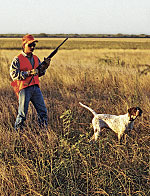
From hot, dry weather early in the season to crowded conditions at state wildlife areas where birds are released, pheasant hunting can be a challenge. Yet veteran hunters have learned to use weather, heavy hunting pressure and wary birds to their advantage and shoot bag limits of roosters each fall.
Here are 10 tips from some of the best pheasant hunters around –hunting guides, state wildlife area managers and hunting club owners –on how to find more birds on public and private lands through the West.
1. USE A GOOD BIRD DOG
Each fall, many hunters are successful by walking through cover and flushing birds without a dog. But the most successful hunters are those with a good bird dog, be it a Lab or a pointer. Not only will a dog help you find more pheasants and other upland birds, but can also track down pheasants after they are shot.
“I’ve noticed that really good bird dogs are a huge advantage,” says Vince Oredson, a state wildlife area manager in Oregon. “I’ve seen fields get hunted over and over throughout the day. And then someone with a dog with a good nose will go in and find birds right away.”
Some hunters prefer Labs, which are excellent at flushing pheasants from heavy cover and also unmatched when it comes to tracking down birds after they are shot.
Others like a pointer, which will locate pheasants hiding in grass and brush and let their owner know exactly where they are.
“A flushing dog that can get into the heavy cattails and other cover can be an advantage in the middle of the day,” Oredson says.
“The pointer dogs work better in the shorter grass where the birds will be early in the morning.”
Burt Holzhauser owns the Rising Sun Hunting Preserve in California, one of the West’s best private-land pheasant hunting areas. He utilizes both Labs and English setters at his ranch.
“You have to have a dog,” Holzhauser says. “You lose too many birds because you knock them down and won’t be able to find them without a dog.”
Some private hunting clubs provide dogs and handlers for an additional charge.
2. LEARN TO DRIVE BIRDS
Jeremy Eubank is a very successful hunting and fishing guide. He likes to drive pheasants early in the season when hot, dry weather limits success for many hunters.
Eubank’s technique works with or without dogs, although his Lab helps him bag even more birds. He will have one or more hunters take position at the top of a hill or ridge and wait. Then he pushes the birds to them by walking a slow zigzag pattern through brush and other cover.
Pheasants will often retreat uphill, running through the cover and then fly once the cover ends. That’s where the other hunter should be stationed.
Eubank cautions hunters to avoid pushing pheasants downhill. They will often take off flying before they near the hunters waiting to ambush them.
3. HUNT NEAR WATER
Oredson, the manager of Denman Wildlife Area in southern Oregon, and Holzhauser — whose Siskiyou County, Calif., ranch is rated as one of the best pheasant hunting destinations anywhere — get chances to see pheasants under all types of weather conditions. Early in the season and during dry weather patterns, pheasants will often hang out in areas with lots of water.
“They are going to be closer to the water holes,” Holzhauser says of birds in dry weather. “They are going to be in the good cover.”
Oredson agrees: “The birds will gravitate to streams and water holes during hot weather.”
Also look for birds near other water sources, aside from with streams and ponds — such as faucets, irrigation canals, livestock watering containers, pump houses and irrigation equipment.
4. PRACTICE MAKES PERFECT
Private hunting clubs are gaining popularity with hunters as places to train their dogs before hunting pheasants on public-land areas. Hunting clubs and preserves often open before the general pheasant season and are great places to give bird dogs exposure to pheasant hunting.
Break out your rain gear and waterproof boots after the first big storm of fall for some of the best opportunities of bagging a pheasant.
“I have quite a few people who start young dogs here,” Holzhauser says. “I can flag the birds or tell the hunter exactly where they are. You know your dog is on a bird and not a rabbit or something else.”
Hunting clubs also often have a variety of types of cover to expose flushing and pointing dogs to differing terrains, vegetation types and hunting situations.
“I like to mix it up,” Holzhauser says of training new dogs. “I put them through everything from grain fields to tall wheat grass to sagebrush.”
It’s also a good idea to get reacquainted with your shotgun before the season starts — instead of when your dog points to or flushes the first rooster of the season.
“Practice shooting some clay pigeons before the season,” Oredson suggests. “Go out to the gun range and make sure your gun is functioning right. Pattern your shotgun. Make sure you are shooting a good pattern.”
Just as deer hunters scout before rifle season opens, good pheasant hunters will make a trip to their favorite hunting area before upland bird season begin. Watching where the birds are without hunters around will reveal locations to keep an eye on early in the mornings and late in the afternoons. Scouting for pheasants will also reveal cover types to be aware of once hunting opens.
5. SELECT THE RIGHT SHOT
While many hunters prefer 20-gauge shotguns for pheasant hunting, some like a 16-gauge. And the ever-popular 12-gauge, also used for duck and goose hunting, will suffice.
At Holzhauser’s ranch, lead shot is allowed. “I like No. 5 lead shot,” Holzhauser says.
“Something comparable to 4 and 6s. A heavy load, because the birds are tough enough that 7 1/2 isn’t going to knock them down.”
Holzhauser has seen hunters shoot birds with 7 1/2 shot. Despite being hit, the birds will often survive the blast and live.
If using steel shot, go with a bigger size than if you were using lead. On public lands, lead shot often cannot be used. Instead, size-4 steel shot is a good choice.
“Four seems to be the most popular size shot,” Oredson says. “You have a little less range with steel. If you keep them under 50 yards, you should do fine,” he says of shot range.
6. TIME YOUR HUNTS
Just like most hunting and fishing, pheasant hunting tends to be at its best early in the morning and again in the evening.
Mornings are best because the birds are often found in grasses or other light cover, searching for food. Once hunters and dogs arrive, the birds will retreat to heavier cover until pressure eases. They will then begin searching for food again.
At private hunting clubs, however, hunting is good throughout the day, as birds are often released several minutes to a few hours before hunters begin their hunt. Hunters can tell hunting club managers what type of hunt they want, from beginner to more challenging and if they want the birds disoriented or not.
On public grounds later in the day, the birds will come out again when hunting pressure drops off.
7. FIND PHEASANT SIGNS
When hunting new areas, Holzhauser says there are several giveaways — including tracks and crowing — to indicate if there are birds in the area.
“You will see them crossing the road,” said Holzhauser. “You’ll hear the roosters crowing.”
Late in the evening, pheasants will come out and feed before bedding down. You can often see them at dusk, which is a good time to scout for pheasants.
When scouting a new pheasant hunting area, Oredson suggests you look for birds where corn is growing.
“Corn seems to be a magnet for pheasants,” Oredson says. “They like the shade, they like the green cover and they like the corn itself. Pheasants also like thick cattails. Marshy areas hold a lot of birds, but they are a little harder to hunt.”
8. BE PATIENT
Many hunters become frustrated when they don’t bag a rooster within the first half hour of hunting.
Be patient, says Oredson. “If things aren’t working, take a break, sit down, eat a sandwich.” he says.
“Things change all the time. Another hunter can push birds into our area. Don’t get too frustrated. Sometimes you have to let the birds come to you.”
If you know birds are in an area but have hunkered down, slowly work the area with your dog. Break down the entire area and methodically going through all the cover with your dog.
9. HUNT THE COLD
The first really cold spell of the year can produce some of the best pheasant hunting of the season.
“The advantage of cold, wet weather is it’s easier on the dogs, and it makes the scenting conditions better for the dogs,” Oredson says.
Break out your rain gear and waterproof boots after the first big storm of fall for some of the best opportunities of bagging a pheasant.
Pheasants can also be easy to track on muddy or snow-covered ground.
10. KNOW THE REGS
Study the hunting regulations in your state before hunting. Regulation books will often include public-land release sites for pheasants.
Hunters must also be aware of tag and recording requirements.
Also be aware of any hunter orange requirements, load or firearm restrictions or hunter education requirements for your state.
IT ALL STARTED HERE
Although the Plains States have a reputation for top-quality pheasant hunting, pheasants were first introduced to the U.S. in the Pacific Northwest.
After ring-necked pheasants were brought in from China in 1882, Oregon’s Willamette Valley was the first place in the U.S. to sustain wild populations of the birds.
Pheasants were also introduced to the Longview, Wash., area at the same time. The newly introduced birds thrived, and their populations quickly grew into the tens of thousands.
Eastern Oregon, eastern Washington and northeastern California still have good numbers of wild pheasants, although the birds are not as plentiful as they once were because of changes in the agricultural industries.
Pheasants thrive in farming areas of each state, but also are found in state wildlife areas where they are raised and released for hunters.
Wednesday, April 2, 2014
Duck Hunting Tips: 6 Old Tricks That Still Work
by Doug Howlett

Waterfowlers have proven to be some of the most resourceful of all sportsmen throughout history, with their combined approach of calling, decoying, and plain old woodsmanship. Here are six old-school tips worth remembering as you prepare to hit the water for ducks and geese this fall.
Add motion ▶ Before motion decoys, hunters used jerk strings and pumped their legs in the water to send ripples through their spread. Another great trick is to mount an electric trolling motor to your blind or on a wood frame painted to blend in, set it near your spread, and let the propeller run just below the surface. The motion will provide silent but continuous motion to your decoys and keep water from freezing, too.
Fake a water hole ▶ Virginia waterfowler Kurt Derwort can be found most days of the season hunting geese on the state’s famed Eastern Shore, where on frozen mornings old-timers used to use large sheets of plastic—cut in irregular shapes—to mimic a shallow depression of water in a field. To make the trick work for ducks or geese, Derwort says to find a depression, remove any big stalks and weeds, lay the plastic down, and put the weeds and a few decoys around the edge. Sprinkle the plastic with water to give it more reflection and shine. From the air, it will look like open water when everything else is frozen.
Muddy the waters ▶ Ducks feeding in the shallows upset the bottom and make the water muddy. Clear water will look unnatural to ducks pulling a fly-by, so stir the muck up in your spread by stomping through it and grinding your feet around during slow, flightless periods. Skim the submerged soil with a paddle, or if you’re on an ATV, drive it in figure eights to stir up silt, which will linger for at least a half hour.
Multiply with mud hens ▶ Another old trick is to hunt a marsh at low tide and flip a shovelful of mud onto an existing mud mound or in a very shallow spot to make it look like a duck floating among a scattering of real decoys. Derwort says mud hens or mud ducks are a cheap way to make it look like there are more bodies in your spread than you’ve actually put out.
Ratchet it up ▶ One of the best pieces of waterfowling gear to carry along with your calls and shells is a pair of ratchet cutters. Whether your blind needs a quick spruce up just before legal shooting light or the ducks prefer landing in another part of the lake and a move is in order, cutters allow you to quickly and quietly snip limbs up to a half inch thick that can be used to brush-in a favored spot or set up an impromptu blind along an open bank where the ducks are waiting to land.
Look lazy ▶ On warm, still, or cloudy days when ducks can see every detail and flights are few and far between, add a few sleeper decoys to your mix, as well as field decoys lined up on a log. Real ducks tend to loaf like this on such days, and adding these dekes to your mix will make your spread appear far more realistic. A cordless drill enables a quick and easy setup. Just drill a few holes in an existing log and insert your decoy stakes into the holes. Sleeper decoys will also help add to the realism of your goose spread—and can be effective straight through the tail end of the season once ice becomes a factor. A spread of standing, floater, and sleeper decoys can be just the ticket to fool late-season birds that have been shot at for weeks on their way down the flyway.
Saturday, March 8, 2014
The Hunt of A Lifetime
The Hunt of A Lifetime (article written by a past client at Rolling Plains Adventures - 2013 season)
Yes, I had the hunt of a lifetime last year but this is a new hunting season and besides you are suppose to look forward aren't you? This years hunt will be in North Dakota and after going back to teaching full time I have been looking forward to a hunt with my friends. I didn't realize how much I was looking forward till I noticed I was in full protective mode for at least a week before we flew out of New Bern. Full protective mode means not picking up anything heavy, avoiding snotty people that want to shake hands, not eating unusual food ( OK, there is not much that I consider unusual!) and in short doing all I can to stay healthy. It must have worked because I'm starting to write this story aboard the flight to Bismarck, ND. Not all that easy to type in coach without elbow room but I can manage. The plan is to write a little at the end of each day so I don't miss anything.
I want to say this trip started to be planned on the return flight from South Dakota last year but that would be only a partial truth. The real story would have to start over 50 years ago when a sun burned little boy would sit on the dock with his worms and cane pole and look up at those DC 3 planes of Piedmont Airlines coming in to New Bern. Long summer days, a home on the peaceful river and nothing to do but discover wonders around me made an ideal setting to daydream. The roar of those huge planes stirred the imagination even more. What would it be like to be lucky enough to go places and do things? My Mother was always telling me how lucky and blessed we were to have our home on the river but just knowing there were other places to be seen was fascinating to me.
A few years later my life of daydreams was changed forever when I was flung through the doorway of puberty. Daydreams turned into plans and schemes that never quite worked out but it always lead to another plan. A short time later I was married and climbing telephone poles for a starting salary of $68 a week (before taxes!). It was not the daydream I had lying on the dock and watching the planes fly over when I was a boy. I had bills to pay and there just wasn't any money left over for foolishness.
My first chance to do something other than work came from an unexpected source. I joined the National Guard to keep from getting drafted and to get a little extra money. When they asked me to go with the rifle team to shoot in Butner one weekend I thought they were crazy! Travel that far to shoot a piece of paper? Then they told me we would spend the night at a Days Inn and I knew that they had lost it. At the time I was 22 years old and my only motel experience was one night at Atlantic Beach and that was my wife's honeymoon! I decided if the National Guard was crazy enough to send me I would have to go so I became a shooter. After doing well in the match at Butner I got a real surprise when I was told I would be flying to Little Rock Arkansas to shoot in the National Guard championships. I was finally going to fly somewhere and do something!
There have been a lot of of years and a lot of great trips added to my memory since then but I don't ever want to lose the thoughts of those summer days and idle daydreams because those memories are what keep me convinced of how lucky and blessed I am to be the one living the dream!
On to the hunt! This years hunt of a lifetime will be in Bismarck, North Dakota. We will be hunting with Rolling Plains Adventures. They are a hunting outfitter located just outside Bismarck. There are seven of us in the group from New Bern and surrounding area but this will be the first time for all of us when it comes to hunting North Dakota. Picking a hunting outfitter can be a little scary. All of us want the best deal but we also want great memories and stories we can tell about the hunt of a lifetime. We needed comfortable lodging, ample hunting area, guides with good personalities, good food and enough game to hunt. After a lot of phone calls, Internet searches and forum readings we decided on Rolling Plains Adventures. We booked a three day hunt for ducks and pheasants. We were wondering if it was the right choice!
After a challenging flight schedule we arrive in Bismarck and wait outside for our guide to pick us up. He said to look for a dirty red truck and a man with an orange hat. We soon discovered he had described at least half of North Dakota! Luckily he spotted us and we were loaded and on the way to the lodge in a few minutes. We were happy to find the lodge exceeded everything we had read and seen on the Internet. Beautifully remodeled, spacious and clean. We got orientation about how we would hunt, where we would hunt and the guide handled our purchasing of our out of state hunting license. We settled in our comfortable rooms after filling up on North Dakota cuisine and hospitality.
It grieves me more than I can explain to say I think the South has to give up the king of hospitality title to the Dakotas. I have been to most parts of the US and nobody beats the Dakotas for making sure you feel welcome. This trip only reenforced that feeling from the moment we arrived.
Hunting Day 1
The morning hunt was ducks over decoys in a shallow pothole and flooded field. After a quick breakfast we loaded in our guide's truck and headed to the pond well before sunrise. It was a classic prairie pothole less than knee deep. I was wishing I had brought my dog Sammy! He would probably start looking for clams like he does at Cedar Island! After we waded out a short distance and the guide arranged our decoys we settled in and waited till legal shooting time to arrive.
While we waited we were treated to something only duck hunters experience, dawn in a duck blind! As the eastern sky turned from dark cherry red to orange the early flights of teal buzzed by the decoys that were sitting silent on the dark water. Teal are the smallest of ducks but maybe the hardest to hit on the wing. When shooting time arrives we have ducks swarming like bees and I get to enjoy one of the best duck hunts of my life. We all get our limit and then watch as several flocks come into land. It is an awesome sight!
We are the first group to get back to the lodge for lunch which gives us bragging rights that we don't dare waste! We tell about all the hard shots we made and how our young guide is the best! After a great lunch in the lodge we sit in the sun on the porch and recount the morning hunt before loading on the bus for the afternoon pheasant hunt.
The pheasant hunt let's us know just how soft we have become. After a couple miles of walking in heavy cover we finally manage to get enough roosters to quit for the day. Although it was hard on legs and knees for us older guys it was still great fun. We retire for the day after enjoying another great meal and lots of story telling at the lodge.
Day 2
We rise early, eat a light breakfast and head back to the pothole for more duck action. We are not disappointed and have another super hunt. Mallards, gadwall, widgeon and teal are steaming by like feathered rockets but we manage to get our limit again. Actually it seemed a little slower than the first day but it made it more fun by giving us more time at the pothole. Flight after flight of honking geese and chattering sandhill cranes never came into range but were fun to see and hear as they made their way from resting areas to feeding areas. It made me realize that even if I hunt something else I'm always a duck hunter at heart. We get back in time for lunch and change into hunter orange for the afternoon pheasant hunt.
This pheasant hunt was a lot easier than the day before. We hunted standing crops of corn and sunflowers. The huge dried sunflowers were like walking through a field of disc sanders but it was easier than the heavy cover the day before. We had better shooting too and ended up with a lot of beautiful cock pheasants. Mike Mills from Vanceboro NC tried to claim his cock was the largest but we didn't pay him any mind. The day ended with a beautiful western sunset and more good food at the lodge.
Day 3
We hunted ducks at the same prarie pothole and again we had a great hunt. Not as many as the day before but still enough ducks to keep us smiling. It was not our preferred weather for duck hunting but we enjoyed not having to face death to hunt. Pop use to say "If the weather is bad enough to kill a duck it will kill a man"! We also got some unexpected additions to our game bag, 2 redhead ducks and a Canada goose. The redheads are diving ducks and are usually found on large bodies of water. They are the preferred duck for the table around Cedar Island and I hope they live up to their reputation! The goose is my personal favorite and I picked him as soon as we got back to the lodge in preparation for our evening meal. My brother's shot on the goose was so spectacular that it attracted the attention of a Federal Game Warden watching from a mile away. He had laid in wait like a cat in the grass and walked up as we were wading out of the pothole. I think he was convinced that we were using illegal ammunition to be able to bring down a goose from that height! After he checked everything and found nothing wrong we questioned him about guns and ammo. It was apparent that he didn't know enough to pass one of my Gunsmithing I test on shotguns!
It was lucky for us that we didn't get checked by one of our local Game Wardens. North Carolina game wardens have always been tougher than any others. One use to stick his finger in the rear end of the duck and pull it out to smell and tell where the duck came from. He would smell his finger and say "this duck came from Virginia, you got a Virginia license?" I heard he quit doing that when he asked a hunter where he was from and he bent over and said "You tell me!"
For the afternoon hunt we talked our guide into an afternoon goose hunt. We decided it was just more fun to play in the water, shoot bigger shells see ducks and geese and getting a beautiful duck or goose was better than shooting at a dusty old pheasant! OK, the real reason was my foot was hurting so bad that the thought of walking all afternoon made me cringe. When I told my wife how bad it hurt the night before and she said "after what you spent to hunt you better cut it off and walk on the bloody stump! Not much sympathy at my house for sore hunters!
When we got to the field next to the pond I volunteered to lie down in the grass and hide instead of standing in the tall marsh grass. Turned out to be a good decision because it kept me off my sore foot and I got to shoot 3 ducks that were out of range from the decoy spread. It was warm and a soft southern breeze was just enough to make the decoys move and look natural. As the sun started to set the huge flocks of geese that we dreamed about never came but we were treated to another spectacular sunset rivaled only by those I see from Ocracoke. It was a fitting end for a spectacular trip.
My hunting friends and I have learned the hard way that these "trips of a lifetime" will end one day. That knowledge is what makes us try to make it memorable whenever we get a chance to savor time together and enjoy our wonderful storehouse of hunting memories and funny stories. We all agreed this was our best "trip of a lifetime". The outfitter, the guide, the amount of wild game and the beauty of North Dakota all helped to make it special but the most important ingredient was supplied by us, the desire to have a good time and enjoy good company. I won't hesitate to do this trip again. Maybe it's time you tried a "trip of a lifetime"! If you have never had one what's stopping you?
Timothy P. Whealton
Yes, I had the hunt of a lifetime last year but this is a new hunting season and besides you are suppose to look forward aren't you? This years hunt will be in North Dakota and after going back to teaching full time I have been looking forward to a hunt with my friends. I didn't realize how much I was looking forward till I noticed I was in full protective mode for at least a week before we flew out of New Bern. Full protective mode means not picking up anything heavy, avoiding snotty people that want to shake hands, not eating unusual food ( OK, there is not much that I consider unusual!) and in short doing all I can to stay healthy. It must have worked because I'm starting to write this story aboard the flight to Bismarck, ND. Not all that easy to type in coach without elbow room but I can manage. The plan is to write a little at the end of each day so I don't miss anything.
I want to say this trip started to be planned on the return flight from South Dakota last year but that would be only a partial truth. The real story would have to start over 50 years ago when a sun burned little boy would sit on the dock with his worms and cane pole and look up at those DC 3 planes of Piedmont Airlines coming in to New Bern. Long summer days, a home on the peaceful river and nothing to do but discover wonders around me made an ideal setting to daydream. The roar of those huge planes stirred the imagination even more. What would it be like to be lucky enough to go places and do things? My Mother was always telling me how lucky and blessed we were to have our home on the river but just knowing there were other places to be seen was fascinating to me.
A few years later my life of daydreams was changed forever when I was flung through the doorway of puberty. Daydreams turned into plans and schemes that never quite worked out but it always lead to another plan. A short time later I was married and climbing telephone poles for a starting salary of $68 a week (before taxes!). It was not the daydream I had lying on the dock and watching the planes fly over when I was a boy. I had bills to pay and there just wasn't any money left over for foolishness.
My first chance to do something other than work came from an unexpected source. I joined the National Guard to keep from getting drafted and to get a little extra money. When they asked me to go with the rifle team to shoot in Butner one weekend I thought they were crazy! Travel that far to shoot a piece of paper? Then they told me we would spend the night at a Days Inn and I knew that they had lost it. At the time I was 22 years old and my only motel experience was one night at Atlantic Beach and that was my wife's honeymoon! I decided if the National Guard was crazy enough to send me I would have to go so I became a shooter. After doing well in the match at Butner I got a real surprise when I was told I would be flying to Little Rock Arkansas to shoot in the National Guard championships. I was finally going to fly somewhere and do something!
There have been a lot of of years and a lot of great trips added to my memory since then but I don't ever want to lose the thoughts of those summer days and idle daydreams because those memories are what keep me convinced of how lucky and blessed I am to be the one living the dream!
On to the hunt! This years hunt of a lifetime will be in Bismarck, North Dakota. We will be hunting with Rolling Plains Adventures. They are a hunting outfitter located just outside Bismarck. There are seven of us in the group from New Bern and surrounding area but this will be the first time for all of us when it comes to hunting North Dakota. Picking a hunting outfitter can be a little scary. All of us want the best deal but we also want great memories and stories we can tell about the hunt of a lifetime. We needed comfortable lodging, ample hunting area, guides with good personalities, good food and enough game to hunt. After a lot of phone calls, Internet searches and forum readings we decided on Rolling Plains Adventures. We booked a three day hunt for ducks and pheasants. We were wondering if it was the right choice!
After a challenging flight schedule we arrive in Bismarck and wait outside for our guide to pick us up. He said to look for a dirty red truck and a man with an orange hat. We soon discovered he had described at least half of North Dakota! Luckily he spotted us and we were loaded and on the way to the lodge in a few minutes. We were happy to find the lodge exceeded everything we had read and seen on the Internet. Beautifully remodeled, spacious and clean. We got orientation about how we would hunt, where we would hunt and the guide handled our purchasing of our out of state hunting license. We settled in our comfortable rooms after filling up on North Dakota cuisine and hospitality.
It grieves me more than I can explain to say I think the South has to give up the king of hospitality title to the Dakotas. I have been to most parts of the US and nobody beats the Dakotas for making sure you feel welcome. This trip only reenforced that feeling from the moment we arrived.
Hunting Day 1
The morning hunt was ducks over decoys in a shallow pothole and flooded field. After a quick breakfast we loaded in our guide's truck and headed to the pond well before sunrise. It was a classic prairie pothole less than knee deep. I was wishing I had brought my dog Sammy! He would probably start looking for clams like he does at Cedar Island! After we waded out a short distance and the guide arranged our decoys we settled in and waited till legal shooting time to arrive.
While we waited we were treated to something only duck hunters experience, dawn in a duck blind! As the eastern sky turned from dark cherry red to orange the early flights of teal buzzed by the decoys that were sitting silent on the dark water. Teal are the smallest of ducks but maybe the hardest to hit on the wing. When shooting time arrives we have ducks swarming like bees and I get to enjoy one of the best duck hunts of my life. We all get our limit and then watch as several flocks come into land. It is an awesome sight!
We are the first group to get back to the lodge for lunch which gives us bragging rights that we don't dare waste! We tell about all the hard shots we made and how our young guide is the best! After a great lunch in the lodge we sit in the sun on the porch and recount the morning hunt before loading on the bus for the afternoon pheasant hunt.
The pheasant hunt let's us know just how soft we have become. After a couple miles of walking in heavy cover we finally manage to get enough roosters to quit for the day. Although it was hard on legs and knees for us older guys it was still great fun. We retire for the day after enjoying another great meal and lots of story telling at the lodge.
Day 2
We rise early, eat a light breakfast and head back to the pothole for more duck action. We are not disappointed and have another super hunt. Mallards, gadwall, widgeon and teal are steaming by like feathered rockets but we manage to get our limit again. Actually it seemed a little slower than the first day but it made it more fun by giving us more time at the pothole. Flight after flight of honking geese and chattering sandhill cranes never came into range but were fun to see and hear as they made their way from resting areas to feeding areas. It made me realize that even if I hunt something else I'm always a duck hunter at heart. We get back in time for lunch and change into hunter orange for the afternoon pheasant hunt.
This pheasant hunt was a lot easier than the day before. We hunted standing crops of corn and sunflowers. The huge dried sunflowers were like walking through a field of disc sanders but it was easier than the heavy cover the day before. We had better shooting too and ended up with a lot of beautiful cock pheasants. Mike Mills from Vanceboro NC tried to claim his cock was the largest but we didn't pay him any mind. The day ended with a beautiful western sunset and more good food at the lodge.
Day 3
We hunted ducks at the same prarie pothole and again we had a great hunt. Not as many as the day before but still enough ducks to keep us smiling. It was not our preferred weather for duck hunting but we enjoyed not having to face death to hunt. Pop use to say "If the weather is bad enough to kill a duck it will kill a man"! We also got some unexpected additions to our game bag, 2 redhead ducks and a Canada goose. The redheads are diving ducks and are usually found on large bodies of water. They are the preferred duck for the table around Cedar Island and I hope they live up to their reputation! The goose is my personal favorite and I picked him as soon as we got back to the lodge in preparation for our evening meal. My brother's shot on the goose was so spectacular that it attracted the attention of a Federal Game Warden watching from a mile away. He had laid in wait like a cat in the grass and walked up as we were wading out of the pothole. I think he was convinced that we were using illegal ammunition to be able to bring down a goose from that height! After he checked everything and found nothing wrong we questioned him about guns and ammo. It was apparent that he didn't know enough to pass one of my Gunsmithing I test on shotguns!
It was lucky for us that we didn't get checked by one of our local Game Wardens. North Carolina game wardens have always been tougher than any others. One use to stick his finger in the rear end of the duck and pull it out to smell and tell where the duck came from. He would smell his finger and say "this duck came from Virginia, you got a Virginia license?" I heard he quit doing that when he asked a hunter where he was from and he bent over and said "You tell me!"
For the afternoon hunt we talked our guide into an afternoon goose hunt. We decided it was just more fun to play in the water, shoot bigger shells see ducks and geese and getting a beautiful duck or goose was better than shooting at a dusty old pheasant! OK, the real reason was my foot was hurting so bad that the thought of walking all afternoon made me cringe. When I told my wife how bad it hurt the night before and she said "after what you spent to hunt you better cut it off and walk on the bloody stump! Not much sympathy at my house for sore hunters!
When we got to the field next to the pond I volunteered to lie down in the grass and hide instead of standing in the tall marsh grass. Turned out to be a good decision because it kept me off my sore foot and I got to shoot 3 ducks that were out of range from the decoy spread. It was warm and a soft southern breeze was just enough to make the decoys move and look natural. As the sun started to set the huge flocks of geese that we dreamed about never came but we were treated to another spectacular sunset rivaled only by those I see from Ocracoke. It was a fitting end for a spectacular trip.
My hunting friends and I have learned the hard way that these "trips of a lifetime" will end one day. That knowledge is what makes us try to make it memorable whenever we get a chance to savor time together and enjoy our wonderful storehouse of hunting memories and funny stories. We all agreed this was our best "trip of a lifetime". The outfitter, the guide, the amount of wild game and the beauty of North Dakota all helped to make it special but the most important ingredient was supplied by us, the desire to have a good time and enjoy good company. I won't hesitate to do this trip again. Maybe it's time you tried a "trip of a lifetime"! If you have never had one what's stopping you?
Timothy P. Whealton
Tuesday, March 4, 2014
How to Cook Venison
Steps
- Use only venison that has been field-dressed correctly. The longer the meat stays on the deer carcass after the animal was shot, the tougher it becomes. Choose only deer meat that was cut, skinned, wrapped and refrigerated promptly.
- Marinate the meat for several hours before cooking it. A good marinade can be as simple as a mixture of salt, vinegar and water, or something more sophisticated, such as French or Italian salad dressing, Worcestershire sauce, tomato juice or sauce, or a citrus juice, such as from oranges, lemons or grapefruit. The marinade will tenderize the meat and add flavor to it, removing the "gamey" taste.
- Although you can soak the meat in a brine mixture to marinate it, you should not add salt while cooking, as this keeps the meat from browning.
- Trim away all visible fat. The more deer fat that remains, the worse the meat will taste.
- You could render the deer fat into tallow and use it for a project, or form it into a suet cakes to feed birds in winter.
- Substitute the removed deer fat with another fat source. Although the deer's own fat will affect the flavor of the venison adversely, venison is so lean, lacking "marbling", that it needs another fat source to give it flavor when cooking.
- Possible substitute fats include butter, margarine, cooking oil, bacon or ground beef.
- Laying other fat on the meat is called "barding"; poking it into the meat is called "larding". Larding may be healthier in adequately fattening the inside without over-fattening the outside.
- Keep the meat moist when cooking. Because it is so lean, deer meat is prone to drying out when cooked, making it tough and chewy. Cooking with a method that keeps venison moist, such as frequent basting, braising, sauteing, roasting or slow cooking, will preserve the flavor and keep the meat tender.
- When cooking deer meat in a pan, roaster or on a grill, wrap it in foil for 5 to 10 minutes before serving. This will let the juices distribute themselves evenly through the meat without evaporating.
-Step-1.jpg)
-Step-2.jpg)
-Step-3.jpg)
-Step-4.jpg)
-Step-5.jpg)
-Intro.jpg)
)
)
Tips
- Good seasonings for cooking deer meat include parsley, thyme, garlic and onions. Powdered soup mixes often include these and other spices.
- Deer meat can be served as steaks and roasts, cubed for casseroles, soups and stew or ground to make patties or put into chili. You can find specific recipes online or in books published by state conservation departments or hunting associations.
Subscribe to:
Posts (Atom)